Have you ever noticed that when you start thinking about something, it seems to pop up all the time. Like when you buy an orange mini (like mine) you start seeing them everywhere! Your brain unconsciously tunes in.
Recently, I’ve been noticing an abundance of media stories emphasising how generations want different things and work differently, particularly Mid-lifers and Gen Zs. It may be that I’m tuned in (I am a mid-lifer with Gen Z offspring) but I suspect you may have noticed it too.
“Generation Z comprises people born between 1996 and 2010. This generation’s identity has been shaped by the digital age, climate anxiety, a shifting financial landscape, and COVID-19”. (McKinsey, 2023)
I honestly don’t think it helps though – pitting generations against each other, reinforcing divisive stereotypes, over-generalising based on arbitrary date / age divisions.
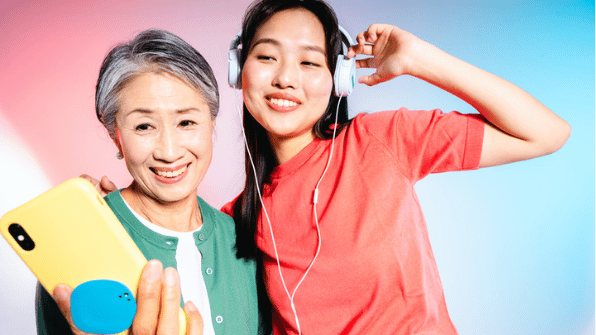
Naturally, there are differences as a function of our lived experiences, exposure to digital technologies, and the socio-economic context we grew up in – but are they really generational? Might they also be about culture, privilege, opportunity or geography?
“Mid-lifers are at the pivotal point in their lives, aged between 40 and 60 in most countries, linchpins of families and organisations”. (Laura Walker)
In my view, we are all wonderfully unique – even identical twins like me and my sister – but as humans we probably do share important fundamentals needs about what really matters.
When it comes to what matters most to us in our work, the top priorities are highly consistent for ‘mid-lifers’ and ‘gen Zs’. They maybe expressed differently, but surely it’s helpful they are similar?
Let’s take a look at them now…
Top 4 priorities – according to the latest evidence and research
The freedom to be ourselves
- Gen Zers value individual expression and avoid labels
- Mid-lifers re-discover who they really are, often pushing against family and societal expectations
Meaning and purpose
- The need for meaning in work present at all ages, but grows through mid-life peaking beyond 65
- Gen Zs want the organisation to have the same values internally and externally, social responsibility is huge
Flexibility
- Hybrid working is popular with both – who are keen to stay connected but also have time for other things
- Midlife women value flexibility 16x more than status
- Gen Zeders not only prefer, but expect, a flexible, hybrid model of working throughout their careers.
Not for me
- “If the juice isn’t worth the squeeze, they’ll leave and find other ways to make ends meet” – a quote from a Gen Z study but can equally apply to over 50s leaving the workplace.
Stronger together
Combined Gen Zs and Midlifers make up over 40% of the workforce already. Instead of talking about each other as different species, how would it be if we worked together? By valuing individual differences, rather than generalised generational assumptions, could we be all be more? By working together maybe we could shift the workplace, to better suite everyone!
“As the world becomes more complex and fearful, we know we need each other to find our way through the darkness. The yearning for community is worldwide. What can we do to turn to one another?” (Margaret Wheatley).

Further reading
Margaret Wheatley (2002) Turning to one another: Simple conversations to restore hope in the future. Berrett-Koehler Publishers, Inc.
Gen Z Is Transforming the Workplace in 3 Key Ways: McKinsey Executives (businessinsider.com)
Gen Z: The workers who want it all – BBC Worklife
What do Gen Z want from the workplace? – Interaction
A New Category of Colleague in the Workplace: Queenagers – Bloomberg
 Fulfilling work