The psychological impact of losing elderly parents is a complex mix of emotions. A dance with fear and confidence – yes, but also a feeling of becoming untethered! Losing both parents (at 83 and 84) within 4 months of each other hasn’t been easy, tougher than I imagined.
Naturally, I turned to the literature to better understand my feelings.
Losing parents in your 50s or 60s is quite common. Census data for the U.S. population in 2021 described the age at which people lost their parents: approximately 11.7 percent had lost their mother between ages 60 to 64 and most lost their father between ages 50-54 (11.5 percent).
Grief specialists (which I am not) suggest that adult children who lose both their parents within a short time are likely to experience compounded grief. This type of grief is when losses are layered one after another and in close proximity.
Successive deaths is not uncommon in older people either, especially if they were still married or together at the time of death. Heartbreak and sorrow are known to accelerate the death of the surviving spouse after they’ve suffered the loss of their lifelong companion.
After Mum died, Dad faded.
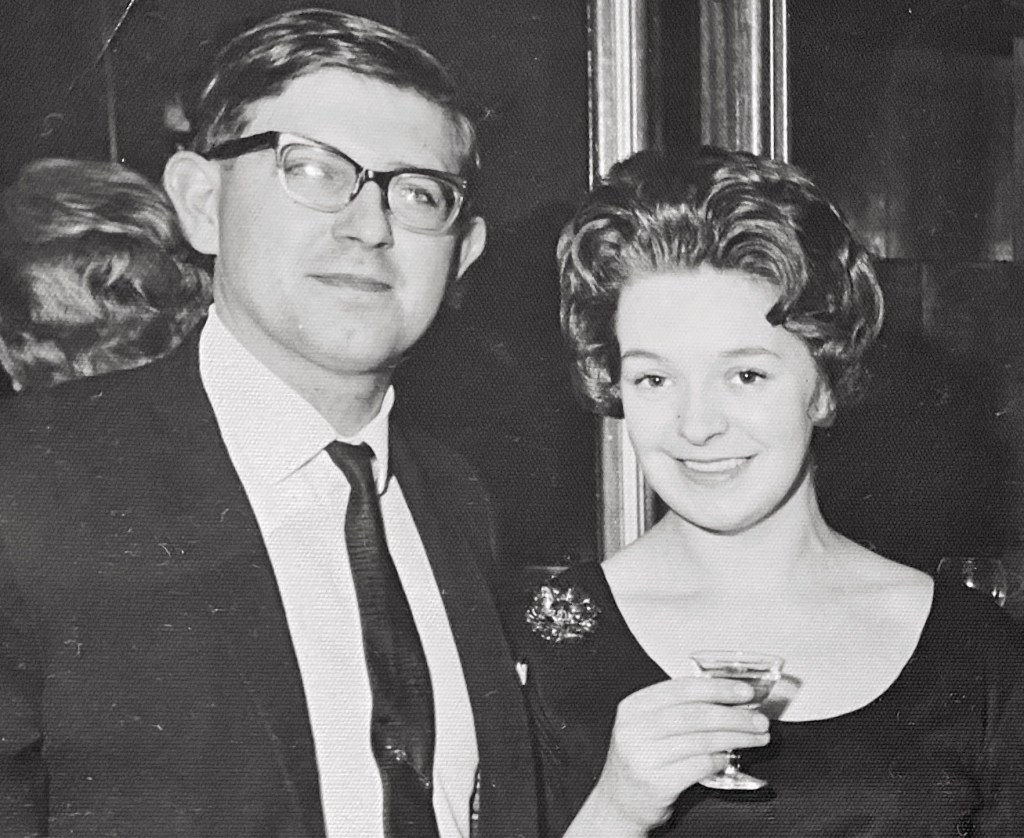
Initially my feelings were oriented to them. It was only a bit later, I started to think about the impact on me, my sisters and our wider family.
The loss of one’s parents in older age is a particularly profound experience. It elicits a complex set of emotional reactions and losses. For those who had the fortunate experience of parents who were supportive, nurturing, and unconditional in their love, the loss may be more intensely felt. Ultimately, however, losing one’s elderly parents late in life should not be dismissed as one that will be experienced with less heartache. When we lose both of our parents, no matter how debilitated they were at that time, we have lost their profoundly symbolic role in our lives as our protector.
Shoba Sreenivasan, Ph.D., and Linda E. Weinberger, Ph.D.
I always felt loved by our parents and never doubted that. I was lucky. But, what now?
Initially, I thought I felt abandoned, but then realised it was more like feeling ‘untethered’. Flapping in the wind, needing to reconnect with other loved ones – my sisters, my children, my husband. I didn’t want to be alone. It has also prompted me to revisit my sense of identity, my life goals, how I spend my time.
The pull of social systems is important, keeping you safe, protected, included. The gravitational pull of the people closest to you is strong, holding you tight. For most people, the strongest pull is from their families. It is about shared norms, rules, expectations, behaviour, beliefs, survival. They keep you grounded—but can also keep you stuck. Without them, you may feel lost.
laura walker, dancing with fear and confidence (2020)
I am learning that my parents love hasn’t gone with them, I hold it now. Our family system is shifting and adapting.
It’s still early days. I am paying attention and being kind to myself. They say no-ones grief is the same – and mine varies day to day, moment to moment. All transitions can be hard, and this is no exception. They can also be growthful. The next chapter of my life is calling and I am (mostly) hopeful.
Here is a poem written by Dad recently – I love it’s alternative perspective on untethered…

Further reading
https://www.psychologytoday.com/us/blog/emotional-nourishment/202307/when-both-elderly-parents-die
https://www.goodtherapy.org/blog/orphaned-in-adulthood-grieving-loss-of-your-parents-0304164

 Fulfilling work