Research suggests that between 60% and 85% of jobs are filled by ‘networking’—just knowing someone who is willing to refer or recommend you. Also, the strength of career relationships is one of the most important contributors to career satisfaction and success.
Whilst the idea of networking brings many grown adults out in hives, connecting with others is inherently natural and fostering your career relationships is generally easier than you think.
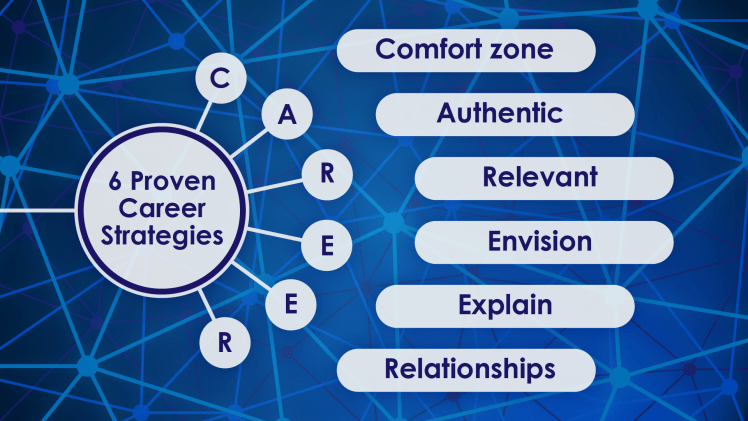
There are two main things you really need to know when it comes to relationships in career development:
- Relationships are really more of a verb than a noun – they move and adapt, they are active rather than static.
- Career conversations are the basis of career relationships and evidence shows there are three main types: emotional, structural, and informational.
Let’s dig further into each of these.
1. Relationships – paying attention to how you relate to someone
Like friendships, it can be useful to think of career relationships as being for ‘a reason, a season or a lifetime’.
- Maybe you’re thrown together for a particular reason – like for a role, project, or event.
- You could be in the same environment for a season / period of time – in the same organisation, same profession, same geography, same commute.
- Maybe you’ve known each other for a lifetime – you keep connecting deliberately or accidentally over a long period of time, across different environments.
When you think about your lasting relationships, you will notice how they evolve – growing / fading / adapting over time. Some relationships need regular of care and attention, others diminish and re-emerge naturally when needed. Some are balanced with equity of exchange / giving whilst others maybe more one sided. Some began as one type then shifted to another – for a reason then a lifetime. Others were context specific – fading when the ‘season’ changed.

By attending to the variety and evolving nature of career relationships, you:
- Have a better chance of understanding their nature and basis
- Recognising if, and how, they could be re-kindled / enhanced
- Reconnect and relate in a way that works for both of you.
2. Three types of career conversations: emotional, structural, and informational
The second factor in career development relationships is having the right mix of career conversations. There are three main types: informational, structural, and emotional.
Informational – are people / conversations that can provide useful content or insight e.g. about types of work, job content, career lessons, the nature of the market currently.
Structural – are relationships / conversations about how things work or provide support to make things happen e.g. a mentor would be someone who could help you navigate an organisation or a profession.
Emotional – are people / conversations where you gain support and encouragement. They may be work-related or outside work.

We need different things at different times so a useful activity is to carry out a relationship stocktake.
Your relationship network can include many different people including your manager, coaches, mentors, colleagues, friends, and family members. There may also be people who you haven’t met yet, who might be able to help you—perhaps managers in other parts of your organization or friends of friends who are already in the line of work you’re interested in. Reach out and expand your connections—introduce yourself to new people and ask for introductions.
- What type of conversations have you had recently?
- Do you over-rely on one type? Do you neglect others?
- What type of conversations do you most need right now?
Top tip: start with ‘warm contacts’ – people you already know and trust, but haven’t connected with in a while.

Finally, here are a few top tips to fostering rewarding career relationships:
- Be willing to be generous and supportive of others, reciprocity builds trust, and giving boosts your positivity.
- Be ready to share your career story.
- Be yourself, authenticity grow understanding and connection, fakery does the opposite.
- Arrange a meeting with someone you haven’t spoken to for a while. Consider whether the conversation is primarily informational, structural or emotional.
- Get curious – people love sharing their insights and experiences. Finish by asking if they could ‘email introduce’ you to someone else.
- Build in accountability, maybe with support from a peer who regularly checks in with you on your progress.

Top tip… start with warm contacts’ – people you already know and trust, but haven’t connected with in a while.

 Fulfilling work