If you experience imposter syndrome, you are not alone. Research shows it’s a very common experience – especially for intelligent, talented, and successful people.
Imposter syndrome was identified in the 1970s and typically features an ‘inner voice’ saying things like:
- “I’m not qualified”
- “I’ve got to where I am now due to luck”
- “I know I will be found out, and exposed as a fraud eventually”
- “What was I thinking, I was never going to succeed”
- “Why should anyone believe what I’m saying”
It is not a medical or a psychological disorder, but can be very limiting for those affected. It is more prevalent in women (thought to be 70%+), as well as gender minorities, LGBTQIA and BIPOC individuals.

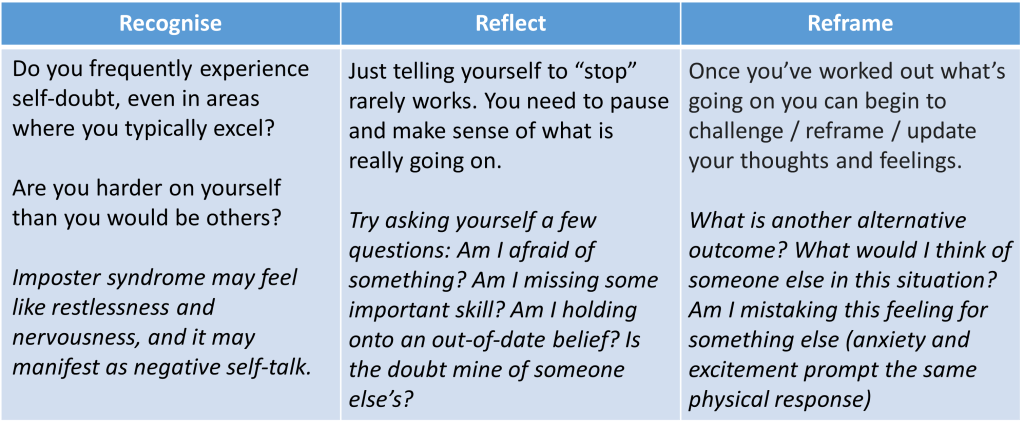
In reality, you can’t make it magically disappear, but you can learn to deal with it – very successfully. By learning to recognise it, reflect differently, and to re-frame your thoughts, you can move past it and significantly reduce the impact it has on your life and your career.
Here are a few practical tips…
Further reading:
Imposter Syndrome: The Five Types, How to Deal With It (verywellmind.com)
One Thought Changes Everything: Amazon.co.uk: Gleason, Mara: 9781545323885: Books

 Fulfilling work