There’s plenty of research showing the importance of role models, but less explaining how role modelling works and how it evolves through your life and career.
In this photo, there are three of my role models – my Twin, my Mum and my Nana. Interestingly, how they have influenced me and my choices has evolved as I have progressed through life and my career.
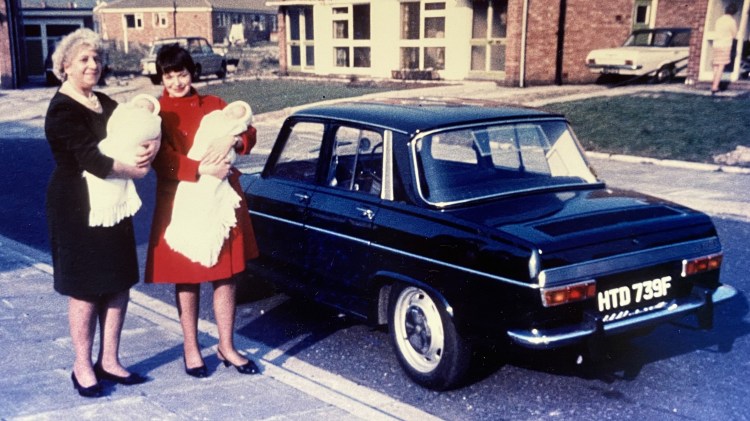
The way people choose, and relate to, their role models changes as they progress in their life and career.
An important study found that people tend to choose their role models by selecting certain qualities, based on whether they are:
- Positive or negative: “I will definitely manage like they do” or “I will make sure I never manage like they do!”
- General or specific: “I admire everything about their leadership” or “I love the way they include everyone in a meeting”
- Close or distant: “I can relate to them, we have so much in common” or “they inspire me as their life experiences are so different”
- Higher or lower in rank: “If they can progress to that level in the organisation so can I” or ” I admire their hard work, dedication, and positive attitude”
For example, my Mum has been a powerful role model for me throughout my career – but the nature of her influence has definitely evolved.
Initially, I admired her ability to have a big job with three children. Later, I focused more on the specific things I would and wouldn’t emulate – such as totally giving up any social life “for our benefit”, despite us wanting her to have some fun too. Now, I recognise how different we truly are (and always have been), in how we relate to others and work as a team – not wrong just different.
She is still a role model, just in a different way. I am proud of her and admire her, but do I want to be her – absolutely not. I want to be more of me, at my best.
Role modelling in early, mid and later career stages
During their early career, people tend to choose role models who are positive, close, and have a range of qualities. You pay attention to role models to help create a viable self-concept of yourself (e.g. as a manager).
- How do I relate to them and their experiences? Can I see myself in them? What do I admire / want to learn from them?
In mid-career stages,people often choose role models who have specific, and sometimes negative qualities. You are refining your self-concept.
- In what ways am I different to them? From what I have learned, what do I agree / disagree with?
In later stages, people focus on role models that enhance and affirm their self-concept. You are becoming more of you (e.g. How can I become more authentic as a leader?
- I know what I am good at, and what I find hard. I don’t need, or want, to be someone else. I am OK.
As people become more confident in their professional self-concept, the influence of role modelling changes – to become more clarifying than shaping.
Knowing this means you can learn and grow from your role models, whilst also becoming more authentically you.
Inspired by: Donald E. Gibson, (2003) Developing the Professional Self-Concept: Role Model Construals in Early, Middle, and Late Career Stages. Organization Science 14(5):591-610.
 Fulfilling work